
01
Analysing issues
The ability to analyse global and cross-cultural issues: facing a piece of material or a set of data, being able to tell fact from opinion and to find the evidence.
International Education
The Mouseion community encourages children and families to read widely across all kinds of books. While nurturing a love of their own country and traditional culture, we also support young readers in developing a global perspective. We understand international education as a kind of preparation of ability— the ability to understand the world and to express oneself clearly.
Why It Matters
The world is caught up in a wave of globalisation, and nurturing global competence in children has become a shared goal of countries everywhere. At Mouseion, these four abilities grow out of reading and are practised again and again through it.
01
The ability to analyse global and cross-cultural issues: facing a piece of material or a set of data, being able to tell fact from opinion and to find the evidence.
02
The ability to appreciate and understand the values and worldviews of others: reading different accounts of the same event, and accepting that "the same book can have different interpretations".
03
The ability to communicate effectively with people from different cultural backgrounds: stating your own views clearly in English, and understanding the other person's reasoning.
04
The ability to take action for the sustainable development of all humanity: turning what you read into real action you can take part in.
"How do our children perceive and understand the world? Only by understanding themselves and their surroundings correctly can children play their social roles well, adapt to domestic and international society, fully develop and apply their strengths, and achieve all-round development."
Benchmarks
International education relies on comparable benchmarks. We use three external measures—Lexile measures, language levels and the Common Core standards— but only as references for choosing books and teaching, never as labels for a child.
| Benchmark | What it is | How we use it |
|---|---|---|
| Lexile measure | The result metric of the Scholastic Literacy Pro reading assessment: a child reads a series of short passages and completes one cloze sentence after each, taking about 20 minutes on a computer or tablet. | As a range reference for choosing books and progressing: choose books within a range from about 50L above the current Lexile to about 100L below; complete a short comprehension quiz after each book. |
| CEFR language levels | The language levels of the Common European Framework of Reference, such as Pre-A1, A1, A2 and B1. | Read alongside the M0–M7 stage milestones to help parents understand "roughly where their child is now and where to go next". |
| Common Core text ratio | The recommendation of the US Common Core State Standards on the ratio of fiction to non-fiction texts. | Referring to its 60% fiction / 40% non-fiction ratio, we arrange the balance of genres and the structure of book lists both in and out of class. |
Resources
The collection covers four domains—Natural Science, Life Science, Social Science, and Humanities & Arts— and includes classic books from dozens of publishing groups such as National Geographic, DK, Scholastic, Pearson, Cambridge and Penguin; the National Geographic Learning series has its own scientifically graded system and is one of the mainstays of our international reading resources.
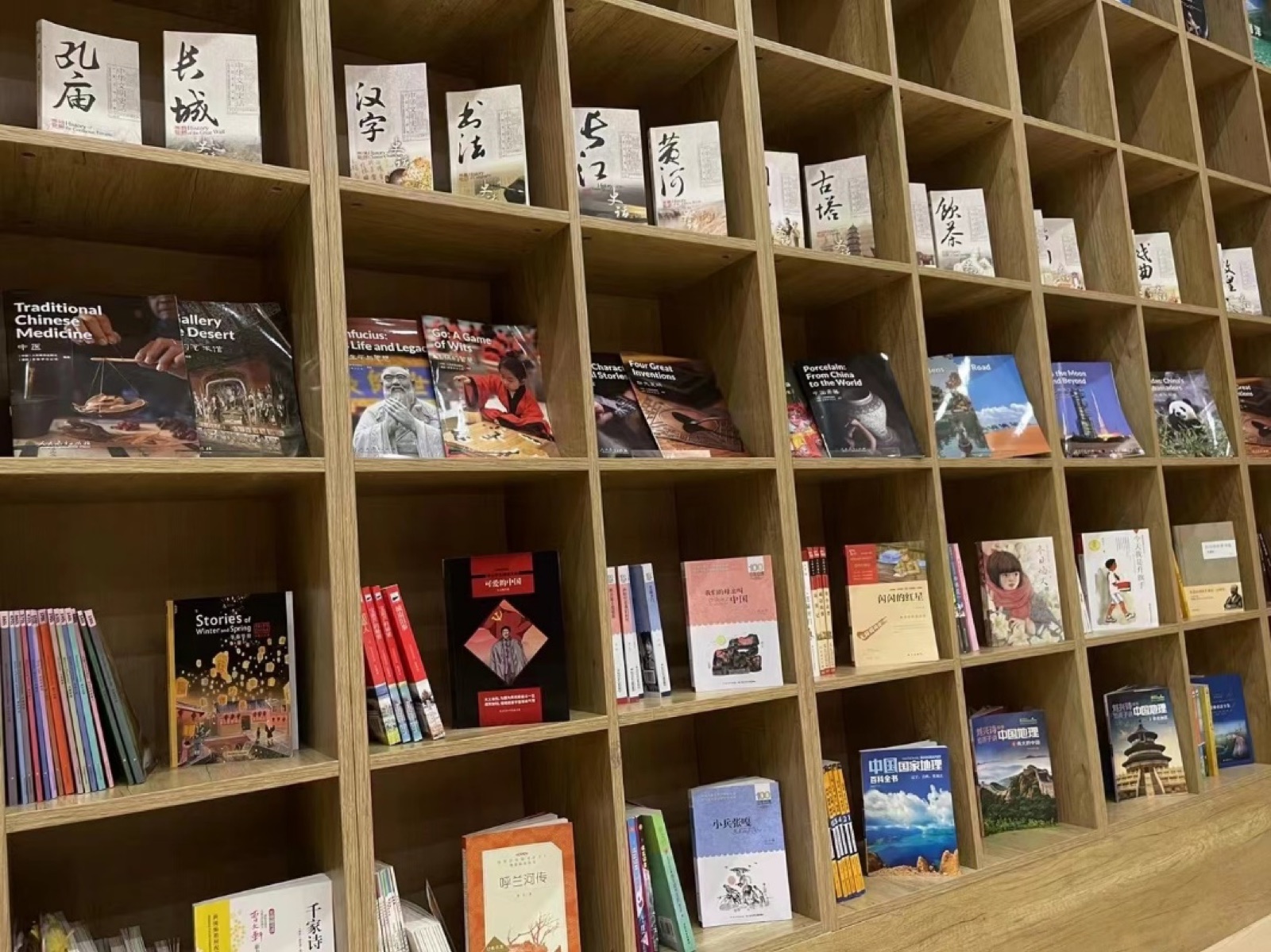
More than 20,000 English-language originals, meeting the knowledge needs of young readers across ages 4–18.
Programs
Reading gives children an entry point to understand the world; camps, expeditions and communities let them truly step into it.
Together with the Northwestern University CTD Gifted Youth Camp, we lead children into a deep experience of American campus life.
Explore the secrets of glaciers with scientists and glaciologists; in partnership with Polar Future, an organisation focused on scientific exploration and climate-change public welfare.
Thirty countries, one a day, setting off on a wonderful journey around the world through reading.
Mouseion World Travel and Classic English Children's Poems, with 14-day challenge check-ins, give holiday reading its own rhythm.
Make real, delicious cookies in an English-language class: follow an English recipe step by step, and divide tasks, negotiate and share results in English—language happens naturally through use.
Camps and exchange programmes open by term; specific dates, age and language requirements are subject to store notices and staff guidance.
Pathway
A global perspective is not the result of a single activity, but a line of ability that runs from age 2 to age 12.
Willing to listen, look and respond, expressing complete sentences around familiar topics; building the connection between sound and meaning.
Moving from "can decode" to "can understand": comparing cause and effect, extracting themes, and writing them into paragraphs.
Finding evidence in texts, synthesising across texts, researching independently and expressing clearly, preparing for academic English.
With independent reading and expression skills, joining international camps, family science expeditions and the online bilingual community.
Recognition
In 2019, the Mouseion Jiangwancheng Children's Reading Centre was completed. It is a widely honoured child-friendly space and a highly praised international child-friendly demonstration library.
As a highly praised international child-friendly demonstration library, it serves as a space for the community to hold cultural activities and public reading.
The space was designed by the FAN AF architecture team, with a concept tracing back to the MOUSEION of Alexandria.
More than 20,000 English-language originals across four reading domains form the material foundation for reading with a global perspective.
Since 2019, more than 20 themed book fairs, 30-plus public lectures and 50-plus public reading sessions have been held, with over ten thousand participants.
FAQ
We prefer to understand it as a kind of preparation of ability: to be able to understand the world and to express oneself clearly. Built on English-language original reading, Mouseion first establishes comprehension, thinking and expression, and then takes that ability into the real world through camps, expeditions and exchange programmes.
Camps and programmes are grouped by age, language and cognitive level; we first look at the child's reading and expression, then recommend suitable programmes. We suggest starting with a reading ability assessment, and our post-assessment recommendations will indicate which type of programme is a good starting point for your child.
They come from different measurement systems and measure different aspects. We treat external measures only as reference benchmarks, and never write any two measures as mechanically equivalent. The real evidence is a child's independent comprehension, thinking and expression in an unseen text.
Book a visit: the child has a hands-on original-reading experience, the parent has a roughly 15-minute interview with a mentor, and on the same day you receive a starting-point recommendation and a draft reading plan. Whether to begin is entirely up to you.
Next Step
Bring your child's age and reading experience to us, and together we'll look at where they are now, and where they can go next.