
01
Choice
Children want to read only when they find the right books. Mouseion matches every child with books suited to their interests and language level.
Reading Workshop
The Reading Workshop comes from pedagogy and psychology and is a common form of reading lesson in Western countries. Readers read by their own choice and at their own pace, discuss and share their reading insights with others, and focus on developing particular reading skills or key concepts.
Key Features
Choice, time, response, collaboration, guidance and assessment — every lesson is designed around these five things.
01
Children want to read only when they find the right books. Mouseion matches every child with books suited to their interests and language level.
02
The lesson gives real reading time of one's own — the kind you cannot put down until you finish.
03
Reading calls for a response: speaking, writing, acting, drawing — expressing understanding in one's own way.
04
Discussing, debating and questioning one another with peers, accepting that “the same book can have different interpretations”.
05
The mentor moves the lesson forward through questions and discussion, sparking higher-order thinking; every observation and piece of work goes into the child's growth portfolio and becomes the basis for the next step in teaching.
Four Modes
The same child needs different “reading companionships” at different stages. Four companions, four kinds of distance, all leading towards independence.
Enter the story through sound. The child need not know every word to follow the plot and enjoy the language.
The mentor models and guides the child in using strategies: predicting, inferring, distinguishing the whole from details, reviewing what came before.
Discussing the same book with peers, sharing ideas, hearing different views and making understanding clearer.
Choosing a book alone and finishing it alone, gaining a sense of achievement at a difficulty that is “a little challenging but not frustrating”.
Differentiated
Although I do not think every child can become a genius, every child has their own strengths; we should uncover those strengths and encourage and nurture them.
— Howard Gardner, developmental psychologist, Harvard UniversityThe knowledge in a book is not confined to a single field. Within the same topic, each person can find their own point of interest and build a “big conversation” inside the subject.
VAK teaching is fully woven into the lesson: children have plenty of chances to join group discussions, presentations, activities and games, engaging multiple senses to learn together.
For example, The True Story of the 3 Little Pigs! — the same event, told by a different narrator, can lead to a completely different conclusion. The ultimate goal of reading is to obtain information; language is the carrier of content.
A good mentor can open many windows onto a single concept; content worth teaching can also be approached in many ways.
Programs
Taking the English Reading Workshop as the main thread and extending out to science reading, holiday camps and computational thinking.
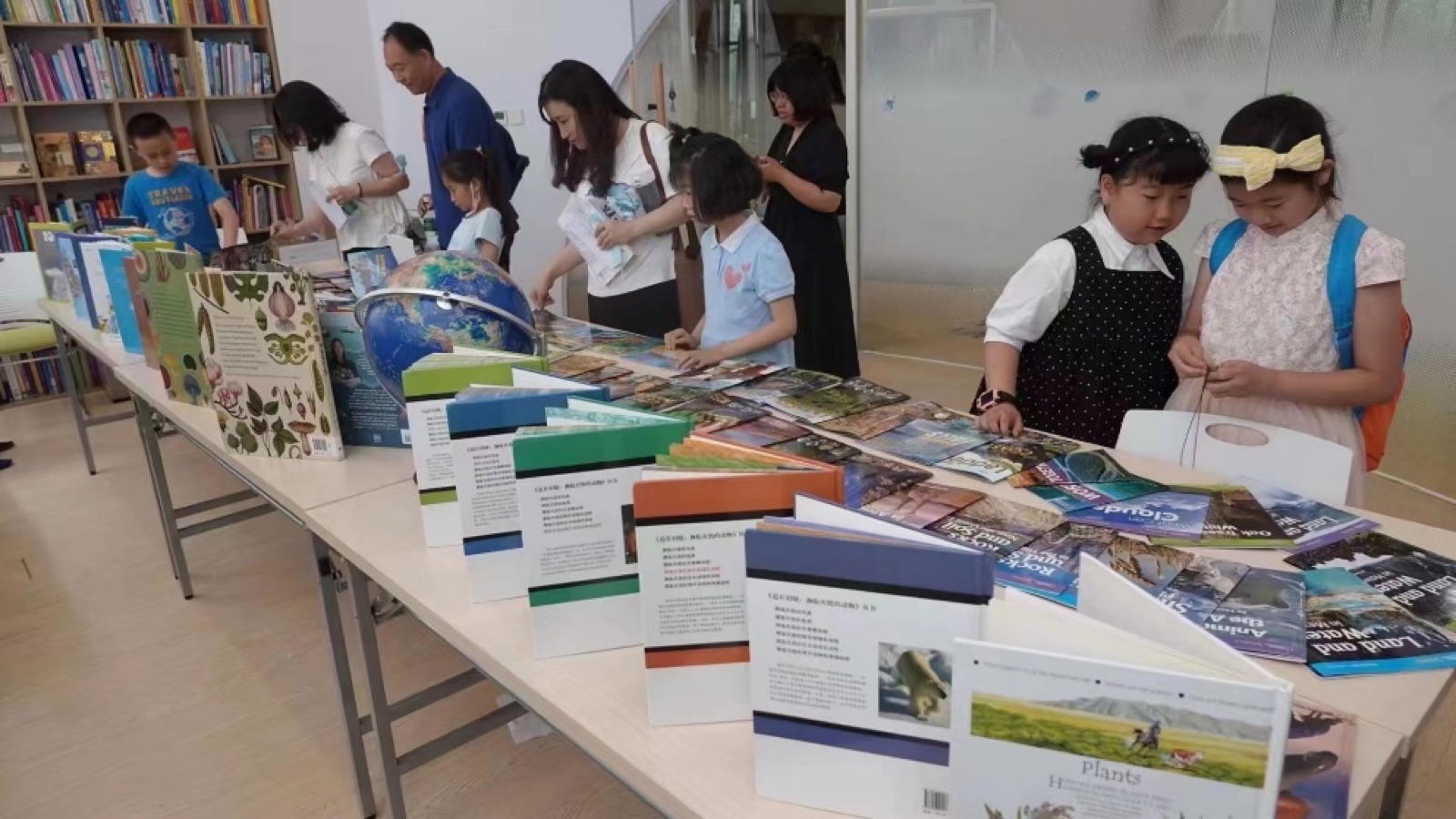
Eight stages from M0 to M7, moving from sound and meaning foundations, themed shared reading and the phonics bridge, to exploration reading and academic reading. Each stage advances reading, thinking and expression together, with outcomes shown as observable evidence.
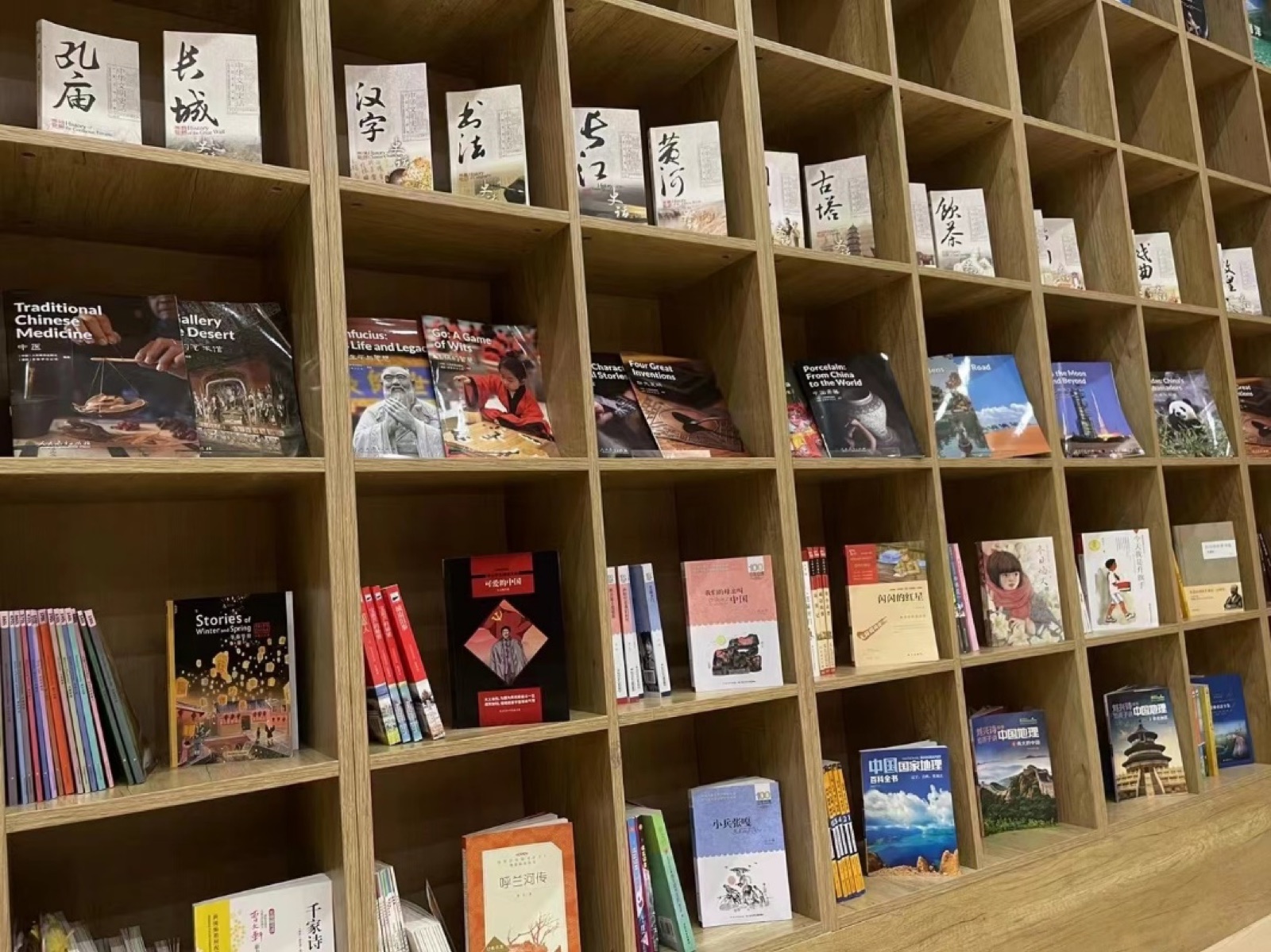
Drawing on more than 1,000 National Geographic Learning titles and following the series' own grading logic, we precisely match the 7 sub-series to the cognitive levels of readers aged 3–18, forming a complete progression chain.
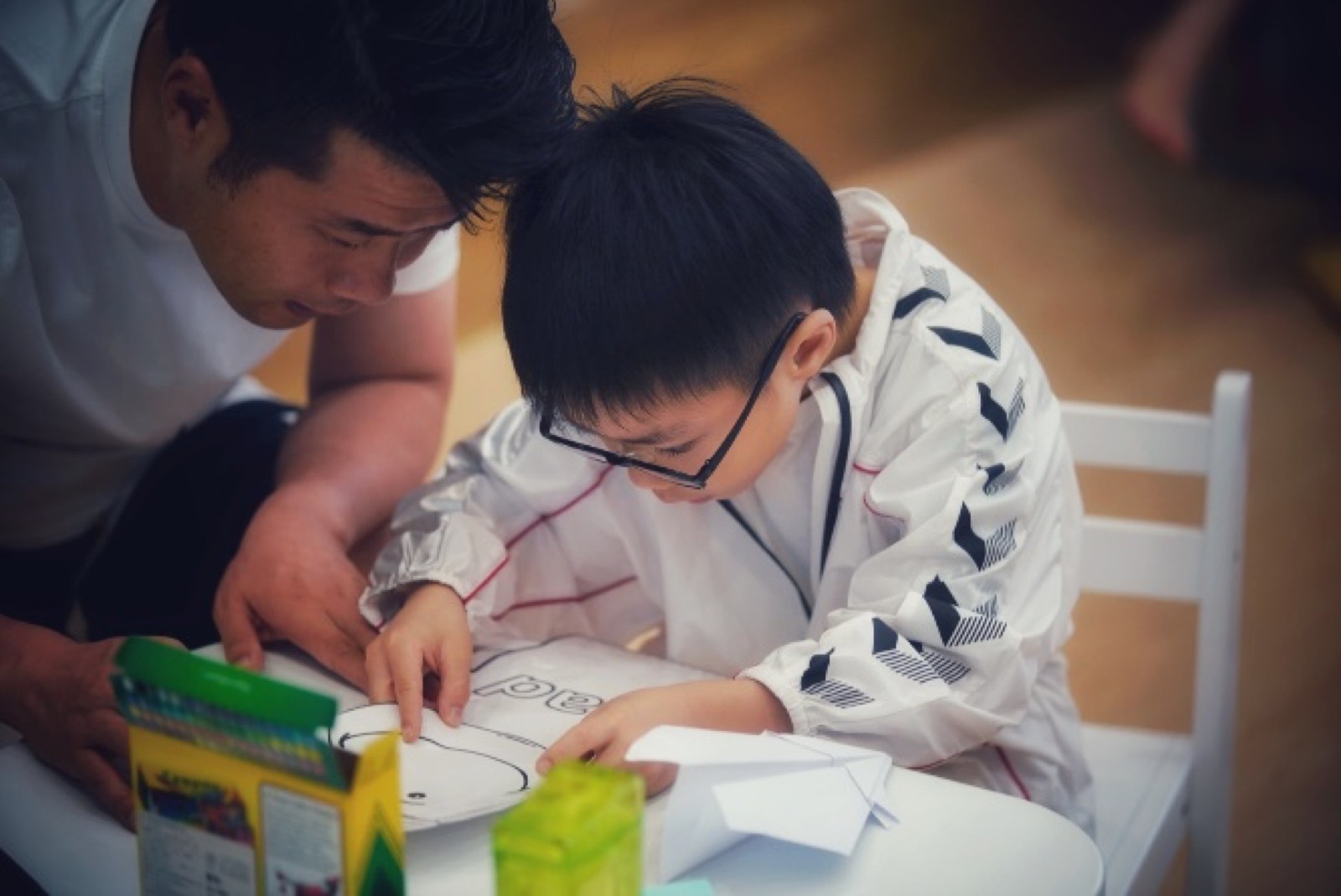
Starting from National Geographic collection topics, we do project-based reading around geography, biology, physics and ecology; the English Baking Camp, the Reading Journey Around the World through thirty countries, and AI Design bring books into the real world.

Coding Foundations (ages 6–10, ScratchJr / Scratch), Coding Applications (ages 9–18, Python), Coding Algorithms (ages 11–18, C++ and data structures), and Coding Fun (topic courses, competition bootcamps).
National Geographic Learning
The National Geographic Learning series has a scientific grading system of its own. Combining the series' design logic with the patterns of child development, we ensure reading difficulty, depth of knowledge and cognitive level progress in step — avoiding both “falling behind” and “not getting enough”.
| Age range | Sub-series | Focus |
|---|---|---|
| Ages 3–6 Early childhood |
Read on Your Own phonics series | High-frequency words + real-life photos + word and sentence decoding. While learning to “spell what they hear and read what they see”, children build links between things in nature and language. |
| Ages 6–9 Lower primary |
Become an Expert reading series | 18 foundation topics across Earth science, life science and physical science, forming a knowledge-transfer path across 3 difficulty gradients. |
| Explore on Your Own reading series | Paired with “Become an Expert” as “complementary knowledge — extended practice”, supporting project-based reading in many settings. | |
| World Windows reading series | A cross-disciplinary view of science and social studies: matter and the senses, force and motion, plants and animals, climate and more, strengthening awareness of text structure. | |
| Ages 10–15 Middle years |
Explorer reading series | Selected classic National Geographic science articles, each topic offered at two language levels: Pioneer / Pathfinder. |
| Ladders reading series (lower level) | Matched to different Lexile values across 3–4 difficulty tiers, with multi-text reading practice on the same topic. | |
| Ages 16–18 Upper secondary |
Ladders reading series (upper level) | In-depth science topics, strengthening academic vocabulary and understanding of argument logic. |
| Footprint series | Each volume covers the cultural footprint of one country / region, across 8 difficulty tiers, with science-fiction short stories plus analysis of scientific reports. |
Why choose National Geographic Learning? Authoritative and professional, with a complete system; vivid content with visual power; precise grading that grows with the child — from microscopic cells to the vast universe, letting children feel the beauty of nature directly.
Learning Loop
Turning the vocabulary and reading skills children learn into real applied ability — no more “memorised but unused, read but not understood”.
Quality English-language originals and audio: narrative, expository, practical and other genres, meeting outside-reading volume targets through sustained reading.
Strategy training and discussion: skimming, close reading, inference and judgement; using context to understand word meaning and paraphrasing in one's own words.
Imitation writing, continuation writing and original writing: from complete sentences to paragraphs, then to multi-paragraph argumentation and oral presentation.
The mentor gives rubric-based feedback and the child revises accordingly — the ability to revise is itself important evidence.
Try It
For a child's first lesson, we start from “what he likes”, not from “what he should already know”.